






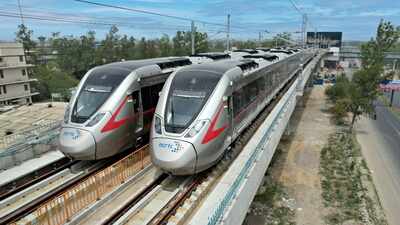


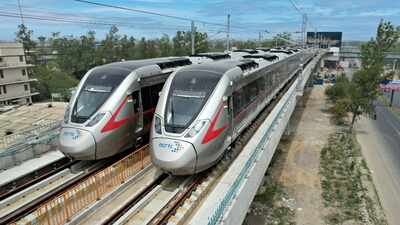
In 2023, India saw the launch of its fastest commuter train service – the Regional Rapid Transit System (RRTS) train service, also called the Namo Bharat. Within years the entire corridor between Delhi and Meerut was thrown open.The Delhi-Meerut RRTS spans more than 80 kilometres and connects with key transport hubs, including the Meerut Metro, Sarai Kale Khan ISBT and Indian Railways stations.Namo Bharat trains have brought the Delhi-Meerut journey down to less than an hour, with trains operating at speeds of up to 160 kmph.And now, the Delhi-Meerut RRTS corridor is taking another important leap – this time on the renewable energy front.
Delhi-Meerut Namo Bharat Solar Dreams
The Delhi-Meerut Namo Bharat corridor is set to receive power from a 110 MW captive solar plant, which is expected to fulfil nearly 60% of the corridor’s electricity needs.The National Capital Region Transport Corporation (NCRTC) has signed a power purchase agreement with NIRL NCRTC Renewables Limited (NNRL) for the project.Also Read | How trains running at 160 kmph aim to transform Delhi-NCR and cities around itElectricity makes up around 30-35% of the corridor’s operating expenses, putting it among the largest recurring costs.The solar plant is estimated to require an investment of around Rs 450 crore and will be developed by NNRL in Jaulan city, Uttar Pradesh, using an 80:20 debt-equity funding structure.“The captive solar project is expected to reduce annual electricity expenditure by around 25% while contributing towards a cleaner, more sustainable future,” said an NCRTC official, which is implementing the Namo Bharat project.Under the agreement, NCRTC will purchase electricity generated by the plant at a fixed tariff for 25 years, providing greater certainty over energy costs over the long term.The electricity produced at the plant will be transmitted through the Uttar Pradesh state grid to NCRTC’s receiving substations in Uttar Pradesh and Delhi. It will then be distributed along the corridor.“The project leverages the Uttar Pradesh Solar Energy Policy to promote the use of renewable energy. It is scheduled to be commissioned within the next 24 months,” officials said.The project is expected to provide environmental benefits in addition to reducing costs. Replacing a significant portion of conventionally generated electricity with solar power is estimated to cut carbon dioxide emissions by around 1.8 lakh tonnes every year.“The initiative is expected to reduce emissions of harmful pollutants such as nitrogen oxides and sulphur dioxide (SO2), contributing to cleaner air and supporting sustainable urban mobility in the region,” the officials said.
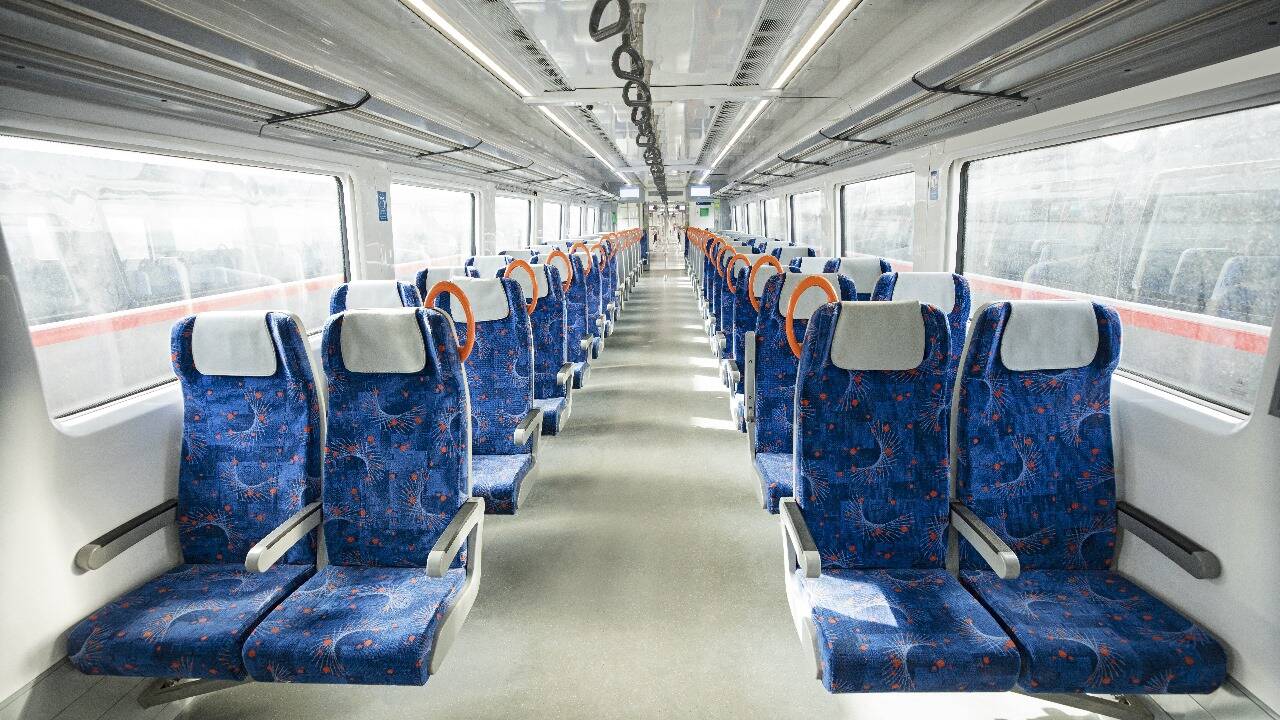
Namo Bharat train interior
The official added that the project is the first of its kind for the country’s RRTS and Metro transit systems. The captive solar plant is expected to establish a new benchmark for incorporating renewable energy into mass urban transportation.Currently, NCRTC generates more than 11 MW of solar power across the Delhi-Ghaziabad-Meerut RRTS corridor. Solar panels have been installed at Namo Bharat stations, depots, RSS and other buildings.
Namo Bharat: India’s fastest commuter train service
The RRTS network is designed to significantly cut travel time between major cities, making it a practical alternative to road travel for daily commuters. The reduction in journey time can have important economic implications, particularly for people travelling regularly between urban centres.The impact will be visible in the proposed corridors as well. For instance, under the planned network, the journey from Kashmere Gate in Delhi to Murthal could take just 30 minutes.Several other RRTS corridors are currently at the planning stage and, once approved, are expected to be developed over the coming years. Here are the key proposed routes:
Delhi-Panipat-Karnal Namo Bharat Corridor
The Delhi-Panipat-Karnal corridor is one of the three routes prioritised under Phase 1.The proposed corridor will stretch for 136 kilometres and is expected to bring the Delhi-Karnal journey down to around 1.5 hours. Travel between Indraprastha and Sonipat could take just 35 minutes, while Kashmere Gate to Panipat is expected to take less than an hour.About 100 kilometres of the corridor will run through Haryana, with the remaining 36 kilometres located in Delhi. The route is proposed to begin at Sarai Kale Khan in Delhi and terminate at Karnal New ISBT in Karnal, Haryana. A total of 17 stations are planned along the corridor.
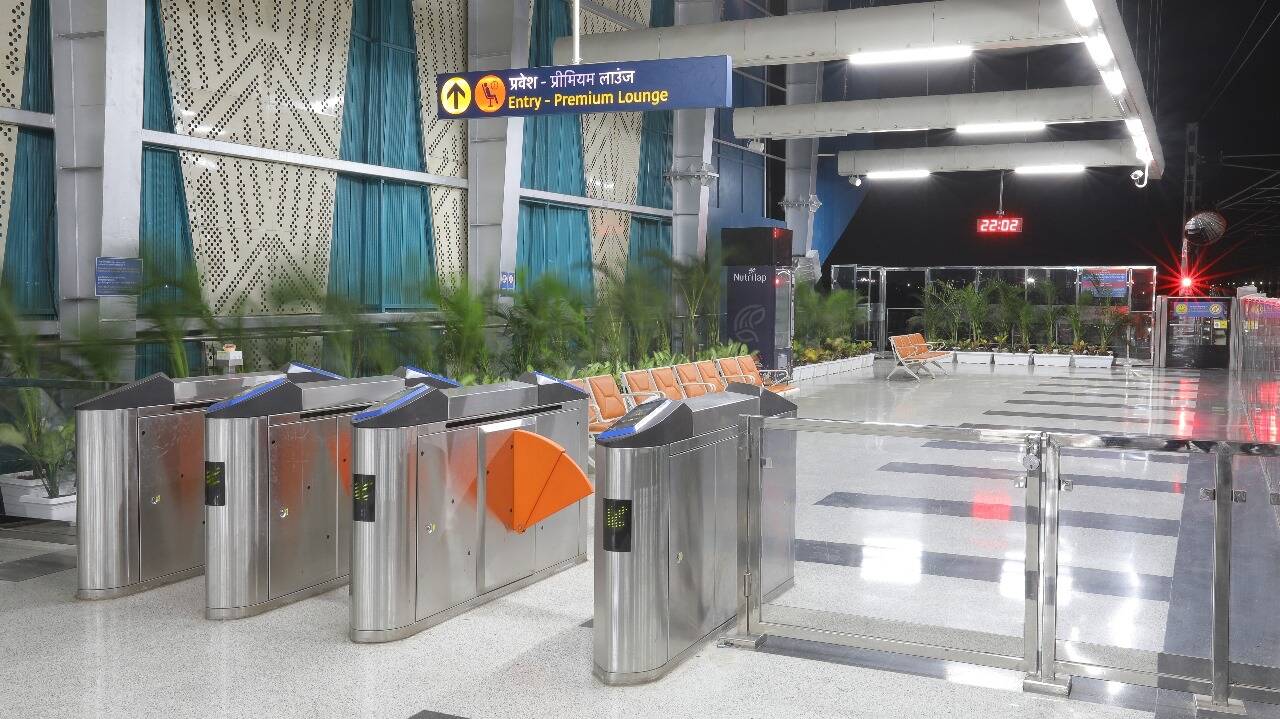
View of Namo Bharat station
Delhi-Gurgaon-Bawal Namo Bharat Corridor
The Delhi-Gurgaon-Bawal corridor is another route identified as a priority under Phase 1.The corridor will run through Gurgaon and Manesar and is also proposed to connect Delhi airport with the Namo Bharat network. It is expected to reduce the journey between Delhi and Bawal from around three hours to approximately 70 minutes.The proposed route will cover around 22 kilometres in Delhi and 71 kilometres in Haryana. Besides Sarai Kale Khan, the corridor is planned to have 13 stations.
Ghaziabad-Jewar Namo Bharat Corridor
The Ghaziabad-Jewar corridor has been proposed to connect the hinterland with the recently inaugurated Noida International Airport at Jewar. NCRTC has prepared the Detailed Project Report for the corridor.The proposed 72-km Ghaziabad-Jewar Namo Bharat RRTS-cum-Metro corridor will begin at Ghaziabad Namo Bharat Station and terminate at Noida International Airport.
Gurgaon-Faridabad-Noida-Gr. Noida Namo Bharat Corridor
A semi-high-speed regional rail Namo Bharat corridor has also been proposed to connect Gurgaon, Faridabad, Noida and Greater Noida. The Detailed Project Report for this corridor is ready.