







In a strange case, a woman sought railway compensation after her husband’s death, but the train he was supposed to be travelling on had left four hours before the ticket was bought!The Delhi High Court has refused to award compensation in a case involving the death of a man who was allegedly killed after falling from a moving train. The Delhi High Court found that the claimant could not establish the basic requirement of proving that the deceased was a bona fide passenger travelling on the train concerned.Justice Manoj Kumar Ohri upheld the 2014 order of the Railway Claims Tribunal, which had rejected the compensation claim brought by Sunaina Devi, the widow of Shambhu Manjhi.
Why the widow lost the compensation claim case
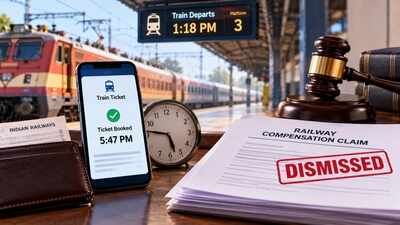
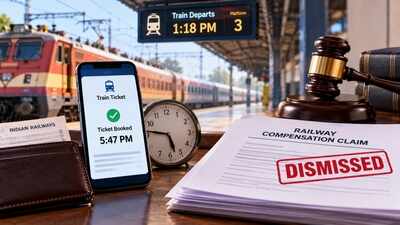
A discrepancy in the railway ticket produced by the claimant became central to the case. Devi’s case was that Manjhi had been travelling from Patna Junction to New Delhi on the Brahmaputra Mail on April 17, 2011. However, the ticket relied upon by her showed that it had been purchased at 5:47 pm on the same day.The railway records, on the other hand, showed that Train No. 4055 had left Patna Junction at 1:18 pm, more than four hours before the ticket was purchased.“This circumstance goes to the root of the appellant’s case,” the Delhi High Court observed. It said there was no satisfactory material to establish that Manjhi had boarded the train on the basis of the ticket produced by the claimant.Devi had said that the general compartment was heavily crowded and that Manjhi was standing close to the train’s gate. According to her, a sudden jerk, along with passengers jostling in the crowded compartment, caused him to fall from the moving train near Sachiwalaya Halt.She further claimed that Manjhi was taken to Patna Medical College and Hospital (PMCH), where he later died from the injuries he had suffered, according to an ANI report.The widow argued that the journey ticket had been recovered from Manjhi and was also mentioned in the police papers. She relied on the inquest report, FIR and the statement of Manjhi’s cousin to support her contention that his death followed a fall from the train.The claimant also contended that the absence of an eyewitness should not, by itself, be enough to reject the compensation claim, especially since the legislation governing compensation for railway accidents is beneficial in nature.
What Railways argued
Indian Railways contested the widow’s claim, arguing that the evidence contained several inconsistencies. The timing of the ticket purchase was one issue, but the Railways also questioned the date on which Manjhi actually died.According to the claimant, Manjhi was admitted to PMCH and died on April 17, 2011. However, his cousin’s statement to the police recorded that Manjhi died at the hospital on April 18, 2011.The High Court further pointed out that neither PMCH’s admission records nor a death certificate was placed on record to support the claim that Manjhi had been treated there and subsequently died.
What the Court said
Justice Ohri said the mere fact that a railway ticket was not recovered would not automatically establish that an injured or deceased person was not a bona fide passenger. At the same time, the person making the claim has to establish the basic facts needed to prove that status.“In the present case, the appellant relies principally upon the journey ticket said to have been recovered from the deceased,” the Court noted.The difficulty, however, was not merely whether a ticket had been recovered from Manjhi. The ticket produced by the claimant itself did not match the journey that Manjhi was alleged to have undertaken.The Court said the key question was whether the evidence established that Manjhi had actually been a bona fide passenger on the particular train identified in the claim.“On the material available, the appellant has failed to discharge the initial burden in this regard,” the Court said.The High Court held that this basic requirement had not been established. Consequently, compensation under Section 124-A of the Railways Act could not be awarded.The Court added that even if the alleged fall from the train were otherwise treated as an “untoward incident”, the statutory right to compensation would still depend on establishing that the deceased was a bona fide passenger.