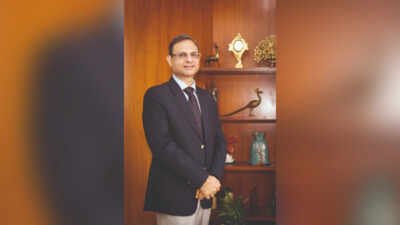








MUMBAI: Indian exporters are leaving much of the benefit of the country’s expanding free-trade network untapped, with only 20-30% of eligible shipments using preferential tariffs against 60-70% in partner countries, RBI governor Sanjay Malhotra said. As a result, 70-80% of eligible Indian exports continue to enter partner markets under regular most-favoured-nation (MFN) tariffs, making them less competitive than goods from countries that use trade agreements more effectively.India has trade agreements with UAE, Australia, EFTA, Oman, UK, Asean, Japan and South Korea, offering lower or zero import duties on eligible goods. Yet exporters, particularly smaller firms, have failed to fully claim these benefits. “It is an opportunity we are leaving on the table,” he said.Speaking at the SME Finance & Investment Summit here on Friday, Malhotra urged MSMEs to break out of a low-growth trap by investing in technology, raising productivity, formalising operations and expanding overseas. He outlined a five-point action plan for businesses and called on lenders to combine digital data with relationship-based banking to widen access to credit.The challenge begins with scale. About 99% of Indian MSMEs remain micro-enterprises, with few graduating into large businesses. The transition rate is far below that in Australia (44%), Israel (42%), Indonesia (31%) and Poland (30%). “By one estimate, only about 10% of India’s large companies in 2022 had been MSMEs at any point after 2000… Too many of our firms are born small and stay small,” Malhotra said.One deterrent has been the fear of losing regulatory concessions and subsidies upon crossing the thresholds for MSME classification. Govt has raised these limits to reduce that disincentive. But size is only part of the problem. Value added per worker in Indian MSMEs is just 26% of the level in large domestic enterprises, leaving them behind both advanced economies and emerging-market peers such as Brazil and Mexico. Raising productivity to the global top-quartile level could add 11% to India’s GDP.Technology adoption is another weakness. AI penetration among Indian MSMEs is estimated at 15%, below China, the US and Germany. Although 76% of MSME leaders use AI in some form, only 5% have embedded it in core operations. Informality compounds the problem: inadequate bookkeeping, delayed tax filings and cash transactions leave lenders with little reliable information on business cash flows, forcing them to depend on physical collateral.