






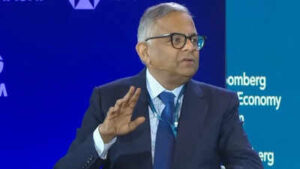




In 2009, when the Unique Identification Authority of India (UIDAI) was formed, the task before its founding team, led by Nandan Nilekani, went far beyond creating another national identity database. India needed a system capable of enrolling more than a billion people while ensuring that one person could not obtain multiple identities and that two different individuals were not mistakenly treated as the same person.The scale was unprecedented. Large biometric databases already existed in several countries, but Aadhaar represented a leap into largely uncharted territory. The challenge was not simply storing a billion records. UIDAI had to solve one of the most difficult problems in large-scale computing: how to establish uniqueness across an enormous and constantly growing population, using biometric data collected under highly varied real-world conditions.
Why comparing every fingerprint with every other fingerprint would not work
At first glance, the problem may sound straightforward: when a new person enrols, compare their fingerprints with those already stored in the database.But at Aadhaar’s scale, that approach would have created an enormous computational burden.This is known as 1:N biometric matching, where one new biometric record must be checked against a large existing database to identify possible duplicates. As the database grows, the number of potential comparisons can rise dramatically.Simply throwing more computing power at the problem was not a practical answer.Instead, the system had to narrow down the possible matches before carrying out the more computationally expensive biometric comparisons. Techniques such as indexing, filtering and multi-stage matching help reduce a massive database to a much smaller pool of likely candidates.In other words, one of Aadhaar’s biggest engineering achievements was not building a machine capable of comparing everyone with everyone else. It was designing a system that avoided having to do so.
The biometric challenge was uniquely Indian
The next problem was the quality of the data itself.India’s population included elderly citizens with degraded fingerprints, manual labourers whose fingerprint ridges could be worn down after decades of physical work, and people with missing fingers or other physical conditions that made conventional fingerprint capture difficult.Rural enrolment conditions also created challenges that laboratory-tested biometric systems were not necessarily designed to handle.A fingerprint-only system could have excluded many of the very people a universal identity programme was meant to include.UIDAI therefore adopted a multi-modal biometric approach, capturing fingerprints and iris data along with a facial photograph. The idea was straightforward but crucial at India’s scale: if one biometric characteristic could not be captured or matched effectively, other available identifiers could strengthen the process.For millions of people, this was not merely a technical convenience. It was central to making a population-scale identity system more inclusive.
Why UIDAI did not rely on a single algorithm
Another unusual feature of Aadhaar’s architecture was the use of multiple biometric technology providers rather than placing the entire responsibility for deduplication on a single vendor or algorithm.The logic was clear. No biometric system had previously demonstrated its performance across a population of India’s scale and diversity. Using multiple automated biometric identification systems introduced an additional layer of cross-verification into the process.This was particularly significant because biometric matching is not mathematically perfect. Systems work with probabilities, thresholds and error rates rather than absolute certainty in every individual comparison.At a population scale exceeding a billion people, even a tiny error rate can translate into a significant number of real cases. The engineering challenge, therefore, was not to claim that biometrics never make mistakes, but to design systems capable of detecting, reducing and managing those errors at an unprecedented scale.
From an experiment in scale to a national digital infrastructure
Today, Aadhaar has issued identity numbers to more than a billion residents and supports authentication services used across banking, welfare delivery, telecommunications and other services.The system’s journey has also transformed Aadhaar into something larger than an identity database. It has become a case study in how computer science problems change when they move from controlled environments into a country of India’s size and diversity.The political, legal and privacy debates surrounding Aadhaar remain important and separate from its technological architecture. But viewed purely through the lens of engineering, the original challenge remains remarkable.A team in India was asked to build a biometric deduplication system at a scale for which there was no ready-made global blueprint. The solution was not simply bigger servers or more storage.It required rethinking how a computer science problem itself could be solved.Disclaimer: This article is based on publicly available information and technical material relating to Aadhaar and UIDAI. TOI Education does not independently verify the performance claims, technical findings or conclusions cited in the source material.