


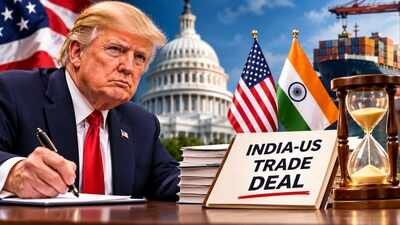





What does Democrats’ win in US midterm elections mean for India-US trade deal prospects? Will Donald Trump be forced to change his strategy?The unfavourable midterm election outcome is unlikely to prompt President Donald Trump to change course on trade, according to an analysis by Global Trade Research Initiative (GTRI).But, it’s important to note that both Democrats and Republicans have increasingly backed economic nationalism, domestic manufacturing and the strengthening of supply chains.Democratic lawmakers, too, favour protective tariffs to safeguard unionised workers and local industries.“The adverse midterm results won’t change President Donald Trump’s trade direction because both Democrats and Republicans now favor economic nationalism, domestic manufacturing, and strong supply chains,” says Ajay Srivastava, founder of GTRI.Unable to rely on Congress for every measure, Trump is expected to continue exercising powers already available to the administration. These include Sections 232 and 301, along with executive orders, Treasury sanctions and rules issued by the Office of the United States Trade Representative (USTR), to exert unilateral pressure on trading partners.
What this means for India-US trade deal
According to GTRI, with foreign policy leverage failing against Russia, China, and Iran, Trump needs a quick win.“Expect heightened pressure on India for a trade deal to prove American clout,” he says.For several months, leaders on both sides have indicated that a trade agreement is close to being finalised. However, the lack of clarity over the US offer appears to have held up its completion, the think tank says.Trump is now likely to use his executive authority to push India towards an early agreement that opens up the Indian market to American agricultural and industrial products, while securing other significant concessions for US businesses.The agreement under negotiation between India and the US is fundamentally different from the other free trade agreements (FTAs) India has entered into. Under conventional trade agreements, both participating countries reduce or eliminate their regular import duties, which are governed by World Trade Organization (WTO) rules and referred to as Most Favoured Nation (MFN) tariffs.The proposed US–India framework, however, follows a different approach. Washington would continue to levy its regular MFN duties, while India would be required to eliminate or lower such tariffs on most industrial products and a wide range of agricultural goods.The February 6 US–India Joint Statement sets out further commitments for India. These include aligning its security and economic policies with Washington, purchasing $500 billion worth of American goods over five years, and relaxing domestic regulatory oversight of imports from the US.“The US may be relying on the threat of additional tariffs to secure India’s compliance. These include potential measures linked to India’s purchases of Russian oil under the Graham Act and Section 301,” Srivastava notes.Also, signing the agreement would not necessarily protect India from further tariff action. The US could still impose additional duties of 15% to 18% over and above its standard MFN rates. In effect, the proposed arrangement would amount to economic coercion.“India should not mistake relief from threatened tariffs for a balanced trade agreement. Opening its markets, committing to large purchases and limiting its policy choices would carry lasting costs, while any U.S. tariff relief could prove temporary. New Delhi should insist on clear, enforceable reciprocal concessions, consistency with WTO rules and full freedom to protect its energy security and development priorities. The pressure to announce a deal must not outweigh the need to secure one that serves India’s long-term interests,” Srivastava says.